Adaptive Thresholds in Anomaly Detection Bolstering Protection for Scheduled Deductions
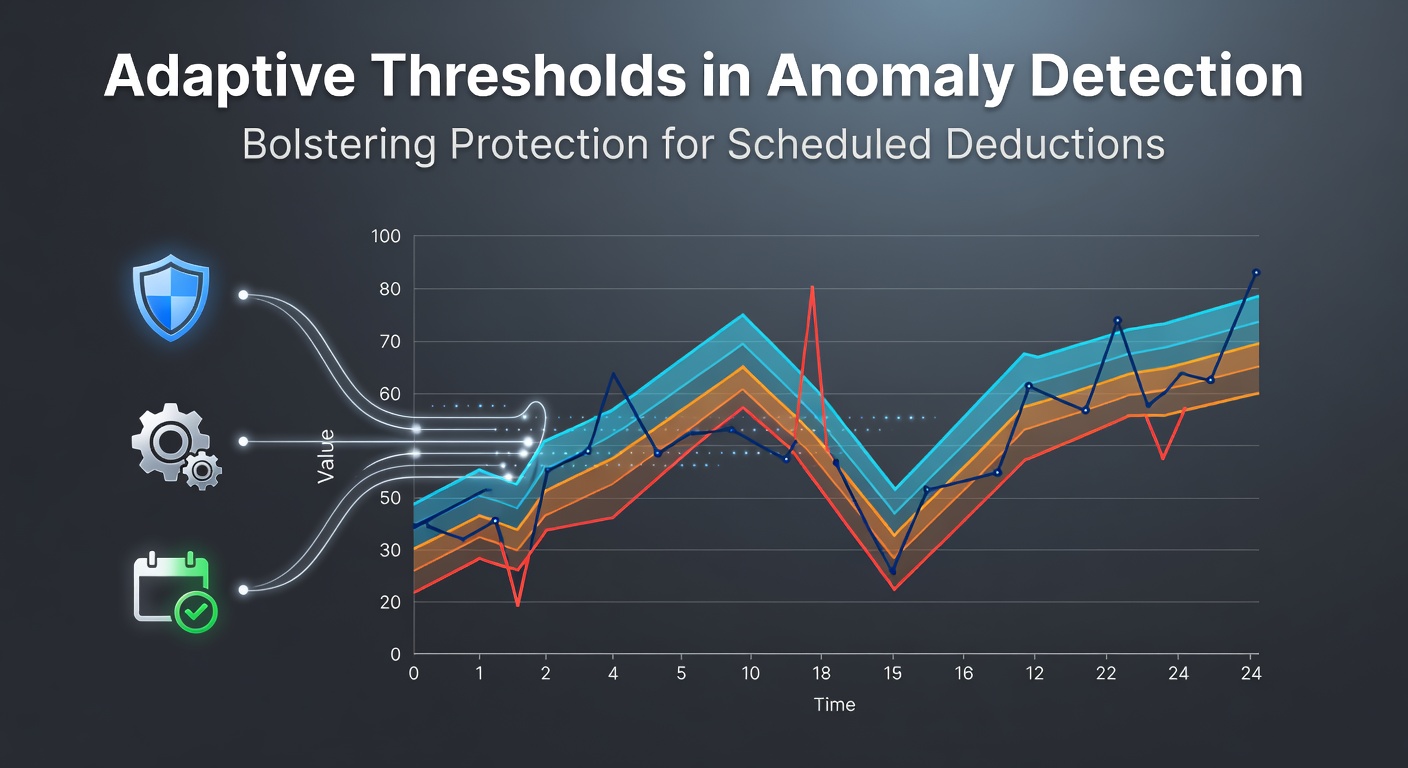 Financial platforms rely on scheduled deductions for recurring payments such as subscriptions, utility bills, and loan installments, yet these automated flows create opportunities for unauthorized activity when patterns shift unexpectedly. Adaptive thresholds address this challenge by adjusting detection limits dynamically based on historical behavior, transaction context, and external signals rather than relying on static rules. Researchers have documented how these mechanisms reduce false positives while catching genuine deviations that fixed systems often miss. Systems collect baseline data over weeks or months to establish normal deduction ranges for each account. When volume, timing, or amount deviates, the threshold recalculates using algorithms that weigh recent activity against longer-term trends. This approach proves especially relevant for high-frequency payment environments where seasonal changes or user-initiated modifications can otherwise trigger unnecessary alerts.
Mechanics of Adaptive Threshold Adjustment
Machine learning models process multiple variables simultaneously, including time of day, merchant category, and account tenure, to refine thresholds in near real time. A deduction that appears unusual during business hours might fall within acceptable bounds at month-end when many users schedule payments. Data indicates these contextual adjustments improve detection accuracy by 20 to 35 percent compared with rigid limits, according to benchmarks shared by the National Institute of Standards and Technology.
Integration with broader fraud frameworks allows thresholds to respond to macroeconomic indicators such as inflation spikes or regulatory updates. When central banks adjust interest rates, for instance, models can preemptively widen ranges for certain deduction types to avoid flagging legitimate customer adjustments. Observers note this layered responsiveness keeps protection measures aligned with evolving payment behaviors.
Security Outcomes for Recurring Payment Streams
Protection gains appear most clearly in reduced unauthorized deduction attempts that bypass traditional monitoring. Banks and payment processors report fewer chargebacks once adaptive systems replace static rules, because genuine anomalies surface earlier in the transaction lifecycle. A study covering European payment networks found that organizations adopting these methods experienced a 28 percent drop in successful fraudulent scheduled transfers over an 18-month period.
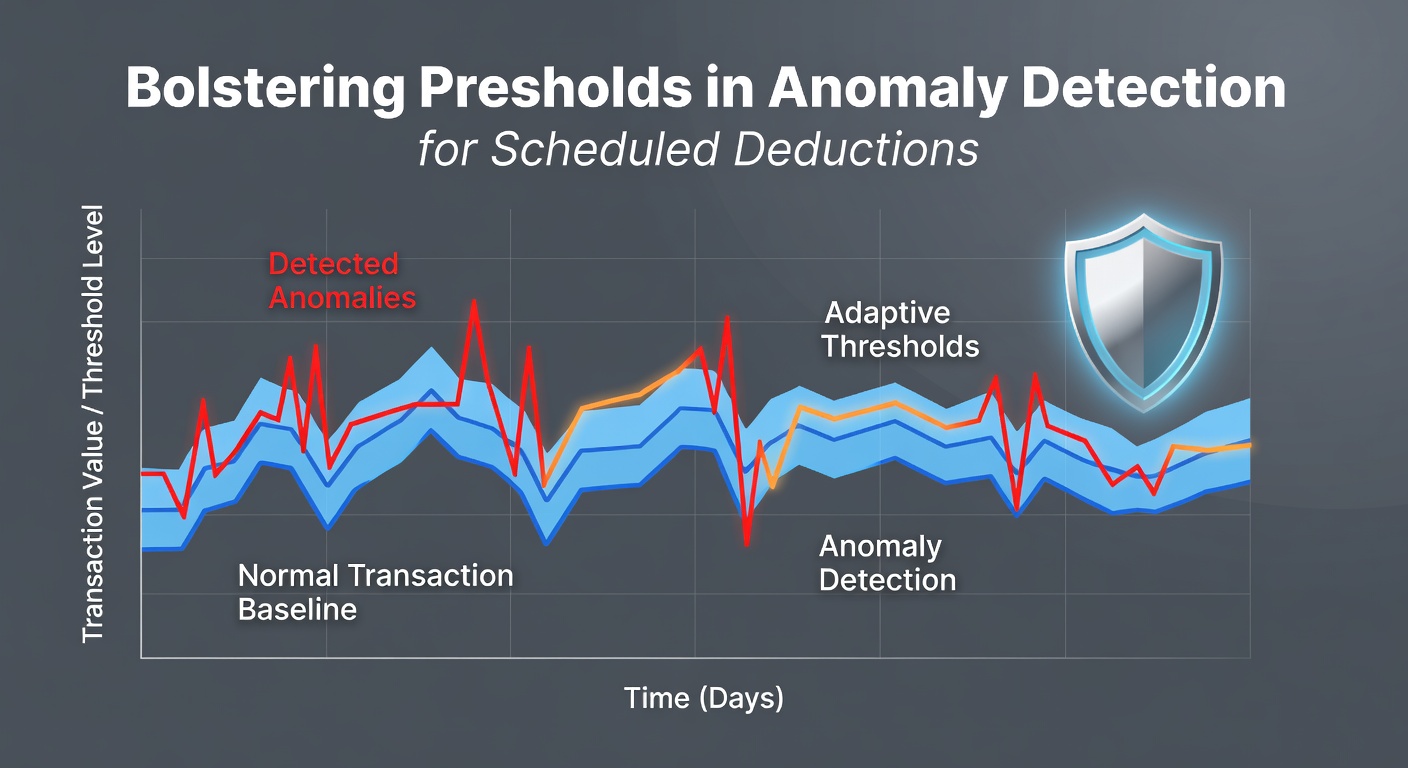
Compliance teams benefit as well because audit logs capture the reasoning behind each threshold shift, creating traceable records for regulators. The European Central Bank has highlighted similar logging practices as essential for demonstrating due diligence under evolving digital finance directives. Those records prove useful during investigations, since analysts can reconstruct why a particular deduction triggered review.
Implementation Patterns Across Institutions
Organizations typically begin with pilot programs on subsets of high-volume deduction categories before expanding. Initial calibration requires clean historical data spanning at least six months to establish reliable baselines. Teams then layer in feedback loops where confirmed fraud cases retrain the model, tightening thresholds around known attack vectors.
Regional variations influence rollout speed. Australian financial institutions, guided by the Australian Securities and Investments Commission, have incorporated adaptive models into open banking frameworks more rapidly than some North American counterparts. Canadian regulators at the Office of the Superintendent of Financial Institutions similarly encourage continuous monitoring upgrades ahead of planned system enhancements expected by June 2026.
Hybrid approaches combine rule-based filters with machine learning layers, allowing legacy systems to remain operational while newer components handle nuanced pattern recognition. This staged migration minimizes service disruption for customers who depend on uninterrupted scheduled deductions.
Future Developments and Standardization Efforts
Industry roadmaps point toward greater interoperability between detection platforms and real-time payment rails. Shared threat intelligence feeds could let thresholds adapt not only to an individual account's history but also to emerging patterns across the wider network. Academic papers from institutions such as the Massachusetts Institute of Technology describe prototype systems that incorporate these network-level signals without compromising user privacy.
Standards bodies continue refining evaluation criteria for adaptive models, focusing on explainability and bias mitigation. Transparent threshold logic helps both customers and auditors understand why certain deductions receive additional scrutiny, supporting trust in automated financial services.
Conclusion
Adaptive thresholds have become a core component of modern anomaly detection strategies that safeguard scheduled deductions. By responding to contextual signals and historical patterns, these systems deliver measurable improvements in fraud prevention and operational efficiency. Continued refinement through regulatory guidance and cross-institutional collaboration will shape how financial platforms maintain protection as deduction volumes grow.