Exploring Encryption Layers That Safeguard Multi-Vendor Invoicing Accuracy in Mobile Exchange Apps
Multi-vendor invoicing in mobile exchange apps requires precise handling of financial documents across numerous parties, and encryption layers form the backbone that maintains both security and data accuracy throughout these exchanges. Researchers have documented how these layered protections prevent tampering while ensuring every invoice detail remains intact during transmission and storage.
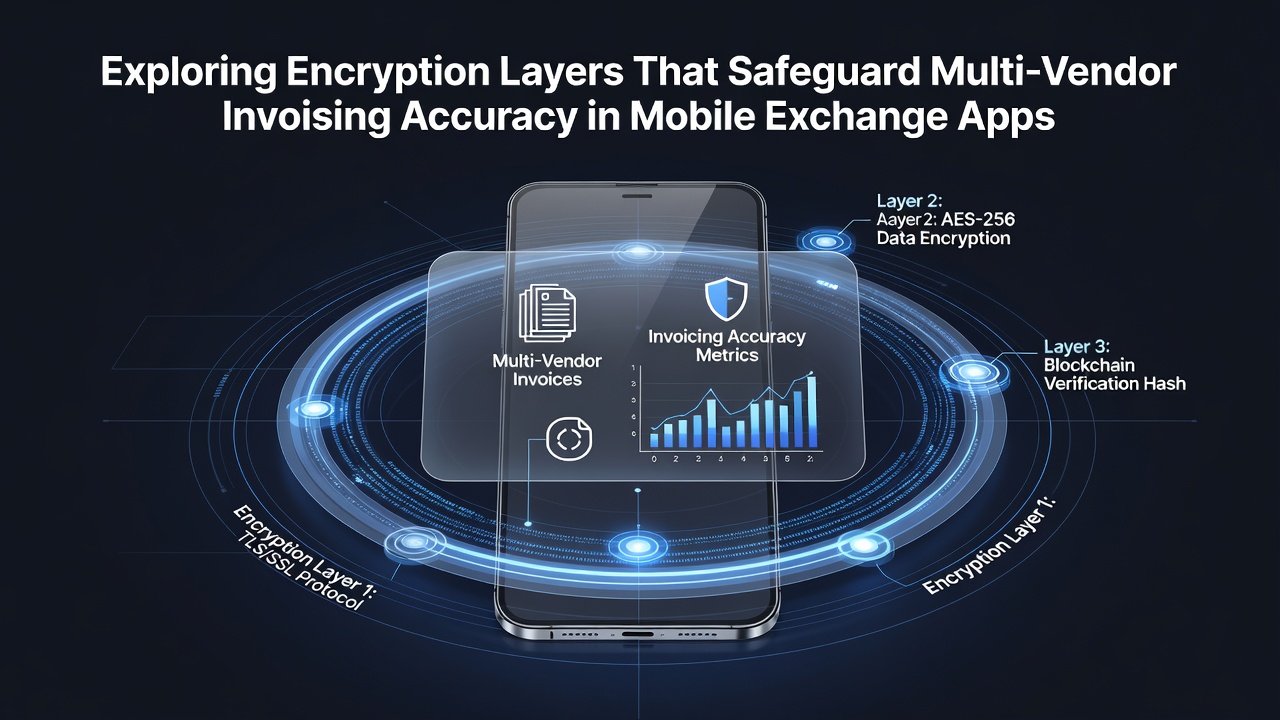
Transport layer security protocols such as TLS 1.3 encrypt data in transit between mobile devices and backend servers, while application-level encryption adds another barrier that keeps invoice contents protected even after messages reach their destination. Studies from various financial technology institutes show that combining these approaches reduces error rates in multi-vendor environments by maintaining verifiable checksums at each stage.
Key Management Systems Supporting Invoice Integrity
Effective key management underpins every encryption layer used in these apps, and organizations typically deploy hardware security modules to generate and rotate keys without exposing them to application code. Data indicates that such systems allow vendors to authenticate invoice submissions through digital signatures that verify both origin and unchanged content.
According to standards published by the National Institute of Standards and Technology, asymmetric encryption methods like RSA combined with symmetric algorithms such as AES-256 create hybrid schemes that balance speed and security for high-volume invoice processing. These techniques ensure that discrepancies in amounts, dates, or vendor identifiers trigger immediate alerts before final settlement occurs.
End-to-End Encryption Across Vendor Networks
End-to-end encryption extends protection from the originating vendor device all the way to the receiving accounting system, bypassing intermediate servers that might otherwise access plaintext data. Observers note that mobile exchange platforms implementing this model maintain separate encryption keys for each vendor relationship, which isolates potential breaches and preserves accuracy across the entire invoice chain.
Homomorphic encryption represents an emerging layer that permits calculations on encrypted invoice data without decryption, allowing platforms to verify totals and tax amounts while data remains protected. Reports from European cybersecurity agencies highlight pilot programs where this technology has enabled real-time accuracy checks across international vendor networks without increasing exposure risks.
Storage Encryption and Audit Trail Preservation
Once invoices reach their destination, database encryption at rest safeguards historical records against unauthorized access, and many systems apply field-level encryption to sensitive line items such as pricing and quantities. This granular approach lets compliance teams query aggregated figures while keeping individual vendor details shielded until authorized personnel review them.
Blockchain-based ledgers integrated into some mobile exchange apps create immutable records of invoice exchanges, and each transaction receives cryptographic hashing that links it to prior entries. Figures from industry analyses reveal that such distributed systems have helped organizations detect alterations within minutes rather than days, supporting regulatory requirements for financial documentation.
Integration Challenges and Protocol Updates
Developers face ongoing tasks when aligning encryption layers with diverse vendor APIs, yet standardized frameworks from bodies like the European Union Agency for Cybersecurity provide guidelines that reduce compatibility issues. These protocols often incorporate perfect forward secrecy, ensuring that compromised long-term keys do not expose past invoice communications.
As platforms scale to handle thousands of vendors, automated key rotation schedules become essential, and monitoring tools track encryption performance metrics to maintain both speed and protection levels. Research published through academic channels in Australia demonstrates measurable improvements in invoice matching accuracy when layered encryption combines with real-time validation routines.
Conclusion
Encryption layers work together to create resilient safeguards that uphold multi-vendor invoicing accuracy within mobile exchange apps, covering everything from initial transmission through long-term storage. Continued adoption of updated protocols and key management practices supports the growing complexity of these financial networks while meeting evolving compliance expectations.