Layered Verification Protocols Enhancing Settlement Integrity in Cross-Platform Digital Remittances
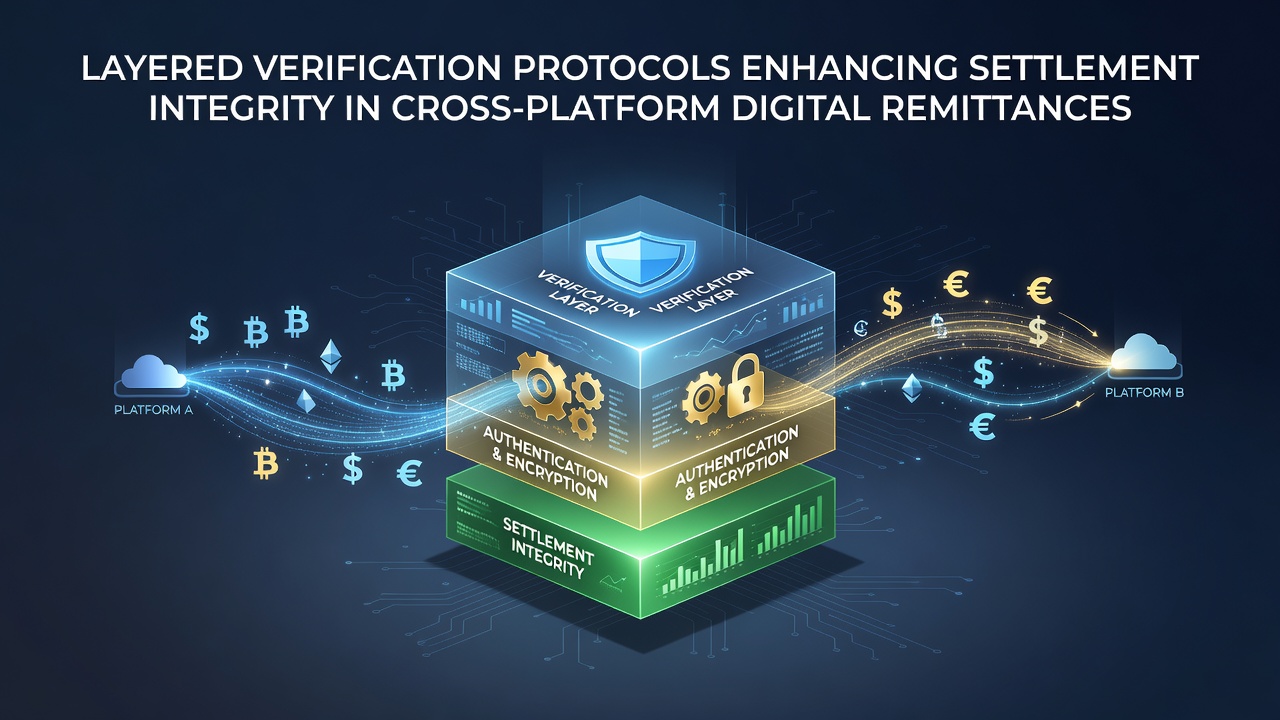
Layered verification protocols combine sequential checks that include identity confirmation, transaction pattern analysis, and real-time ledger reconciliation to maintain settlement integrity when funds move between different digital platforms. These systems operate by requiring multiple independent validations before a transfer completes its journey from sender account to recipient wallet, and they draw on data from various sources such as device fingerprints, behavioral biometrics, and cross-referenced banking records.
Core Components of Multi-Tier Verification
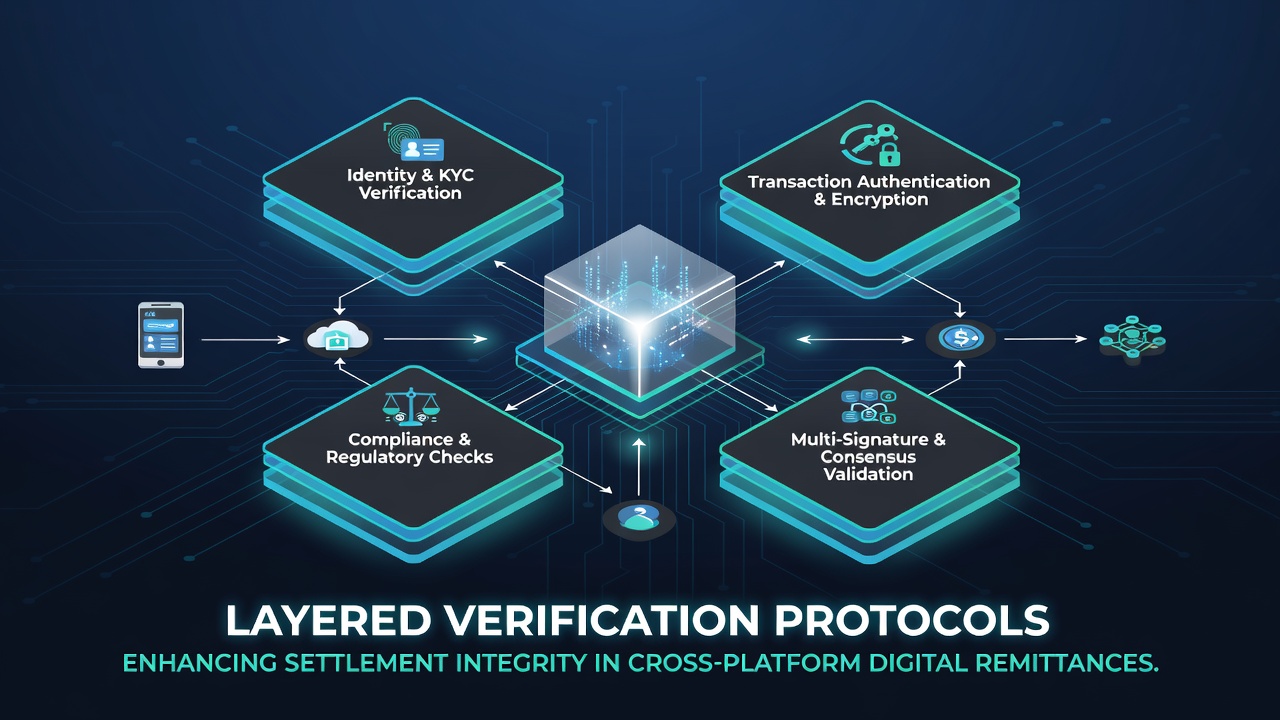
Each layer addresses a distinct risk vector while feeding information forward to subsequent stages, so initial identity authentication might involve government-issued document scans paired wth facial recognition, after which algorithmic models assess whether the transfer amount aligns with historical user patterns or triggers automated flags for further review. Researchers at institutions focused on financial technology have documented how these sequential gates reduce discrepancies in cross-border settlements by cross-checking details against distributed databases that update continuously throughout the day.
Platforms integrate these protocols through application programming interfaces that connect mobile apps, web portals, and backend banking systems, allowing a single remittance request to pass through cryptographic token verification, velocity limit enforcement, and destination account ownership confirmation before funds leave the originating network. Data from the Bank for International Settlements shows transaction volumes processed under such frameworks reached substantial levels by early 2025, with continued growth projected through regulatory updates expected in June 2026.
Implementation Across Diverse Platforms
Operators of digital remittance services apply these protocols differently depending on the jurisdictions involved, yet the underlying architecture remains consistent in requiring independent attestations at each stage; for example, one provider might embed machine learning classifiers that evaluate geographic risk scores while another emphasizes hardware security modules for key storage during the encryption phase. Observers note that interoperability standards developed by regional payment councils help ensure that verification results transfer reliably when a transaction crosses from a European fintech app into an Asian mobile money system.
Take one implementation where a North American service routes remittances through an initial compliance screen against sanctions lists, followed by a secondary check that confirms sufficient balances via real-time API calls to partner banks, and a final settlement confirmation that logs the transaction hash on a permissioned ledger accessible to both parties. This sequence creates an unbroken chain of evidence that auditors can reference when reconciling end-of-day positions across multiple currencies.
Effects on Settlement Accuracy and Audit Readiness
Settlement integrity improves because each verification layer produces timestamped records that feed into centralized dashboards used by compliance teams, and these records allow rapid identification of mismatches before they propagate into final clearing batches. Figures from the Monetary Authority of Singapore indicate that platforms adopting layered approaches reported lower rates of failed settlements in cross-border corridors during 2025 testing periods, largely due to the early detection of mismatched beneficiary details or insufficient verification tokens.
Regulatory frameworks in several regions now reference these protocols when outlining expectations for payment service providers, which means operators must demonstrate that their systems maintain separation between authentication events and final fund movement. Academic papers published through university finance departments have examined how the addition of behavioral analytics as a middle layer further strengthens these controls by flagging anomalies that static rule sets might miss, such as unusual device locations or accelerated transfer frequencies.
Integration with Emerging Standards
As digital remittance networks expand, protocol designers incorporate elements from open banking directives and distributed ledger specifications to ensure verification data remains portable yet secure across borders. This evolution supports scenarios where a user initiates a transfer on one platform yet completes settlement through a separate clearing house, with each step preserving cryptographic proof of prior validations. Those who've studied implementation timelines note that pilot programs running into 2026 will test expanded use of these combined approaches in high-volume corridors.
Coordination between technology vendors and financial institutions has produced standardized message formats that carry verification status alongside transaction payloads, reducing the manual reconciliation work previously required when platforms operated in isolation. What's interesting is how these standards also facilitate regulatory reporting by embedding metadata that satisfies audit requirements without exposing sensitive user information during routine inspections.
Conclusion
Layered verification protocols continue to shape settlement processes in cross-platform digital remittances by establishing sequential safeguards that verify identity, authorize movement, and confirm completion at each stage. Evidence from regulatory bodies and research groups indicates measurable improvements in accuracy and traceability when these systems operate together, and further refinements scheduled around June 2026 will likely build on the same foundational architecture. Platforms that maintain clear separation between verification layers position themselves to meet evolving compliance expectations while supporting reliable fund transfers across diverse networks.