Machine Learning Models Transforming Authorization Validations Across Digital Transaction Networks
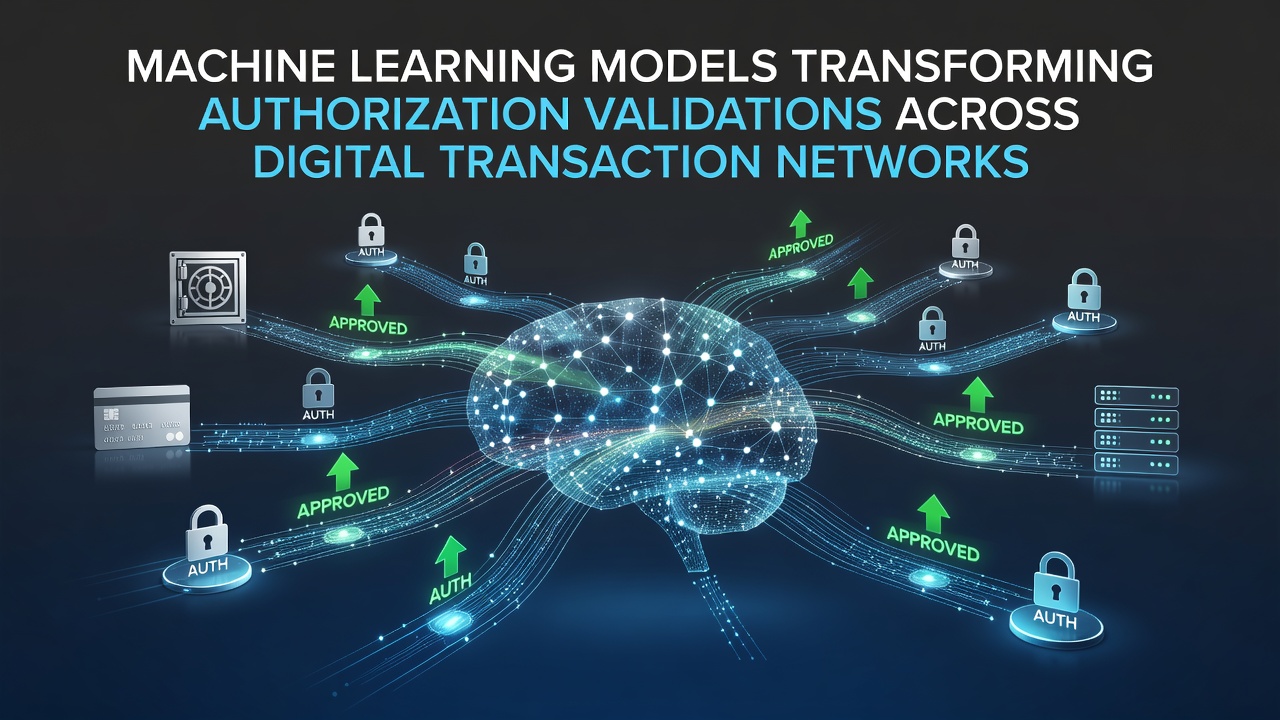
Digital transaction networks rely on authorization validations to confirm each payment request before funds move between accounts, and machine learning models have taken on larger roles in these checks since the early 2020s. These models examine transaction details such as amount, location, device type, and historical patterns to decide whether an authorization should proceed or trigger additional review. Data from multiple central banks shows that supervised learning algorithms now handle the majority of routine approvals in high-volume payment rails, while unsupervised techniques flag outliers that fall outside established norms.
Core Mechanisms Driving the Shift
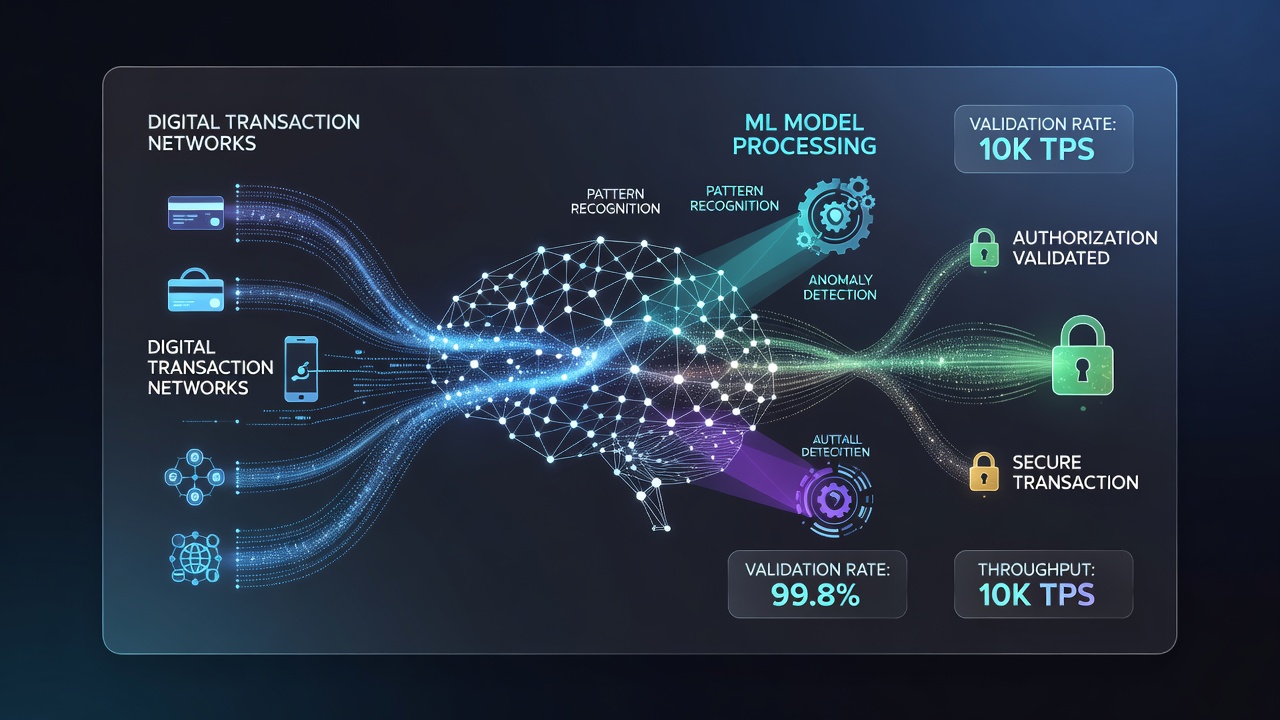
Supervised models trained on labeled datasets of approved and declined transactions learn to weigh hundreds of variables simultaneously, whereas earlier rule-based systems applied fixed thresholds that could not adapt to new fraud tactics. Ensemble methods combine outputs from decision trees, neural networks, and gradient boosting frameworks to produce a single risk score for each request. Researchers at institutions tracking payment data note that this layered approach has reduced the time between request submission and decision from several seconds to under 200 milliseconds in many large-scale networks. Reinforcement learning components further adjust model weights based on feedback from post-authorization outcomes, allowing systems to refine their performance without manual rule updates.
Adoption Patterns Across Regions
Payment processors operating in the Asia-Pacific region began integrating these models at scale around 2023, followed by similar deployments in European and North American infrastructures. Figures released by the Reserve Bank of Australia indicate that machine learning-based authorization systems processed over 85 percent of card-not-present transactions by mid-2025, with continued growth reported into 2026. In the European Union, the European Central Bank documented parallel increases in model usage for SEPA instant credit transfers, where real-time validation against multiple data sources became standard practice. North American operators adopted comparable architectures, often combining on-premise clusters with cloud-hosted inference services to manage peak loads during holiday shopping periods.
Performance Metrics and Operational Changes
Studies tracking authorization accuracy report declines in false positive rates of 30 to 45 percent compared with legacy rule sets, while maintaining or improving detection of fraudulent attempts. These gains translate into fewer legitimate transactions declined at checkout, which in turn reduces customer support contacts and abandoned carts. Network operators also observe lower computational overhead once models reach steady-state performance, because fewer requests require secondary manual review or additional authentication steps. Implementation teams typically begin with historical transaction logs spanning 18 to 24 months, then conduct phased rollouts that compare model decisions against existing controls before full cutover.
Integration with Broader Compliance Requirements
Authorization platforms must satisfy regulatory expectations around explainability and auditability, and model developers address these needs through feature importance rankings and decision logs that record which variables influenced each outcome. As of July 2026, several jurisdictions require periodic model audits that examine training data provenance, bias testing results, and drift detection mechanisms. Operators respond by maintaining version-controlled model repositories and automated monitoring pipelines that alert staff when input distributions shift beyond acceptable bounds. These practices align with guidelines issued by bodies such as the Bank for International Settlements and national financial regulators, ensuring that machine learning components operate within established risk-management frameworks.
Technical Infrastructure Supporting Scale
High-throughput transaction networks depend on low-latency feature stores that supply up-to-date customer and merchant attributes to models at inference time. Stream-processing frameworks ingest authorization requests, enrich them with contextual signals, and return scores within strict service-level agreements. Container orchestration platforms manage model instances across multiple availability zones, allowing capacity to scale during volume spikes without service interruption. Organizations that publish infrastructure benchmarks indicate that end-to-end latency remains stable even when daily transaction counts exceed several billion, provided feature pipelines and model serving layers receive regular optimization.
Conclusion
Machine learning models continue to reshape authorization validations by processing larger feature sets faster and with greater adaptability than previous methods. Regional data from 2025 and 2026 confirm steady increases in adoption alongside measurable improvements in accuracy and operational efficiency. Continued refinement of monitoring, audit, and integration practices supports sustained use across diverse payment networks while meeting evolving regulatory standards.