NFC Standards Powering Contactless Retail Transactions and Encrypted Ledger Integration for Compliance
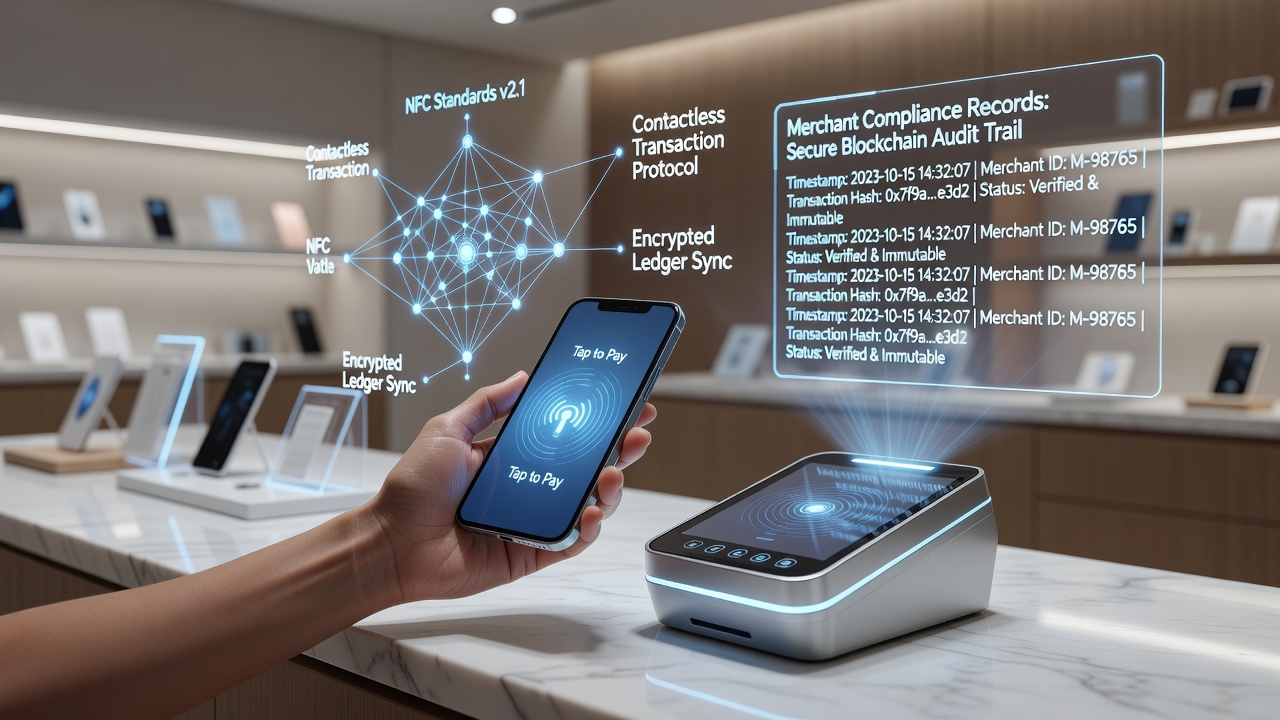
Retail environments have adopted NFC technology based on established protocols such as ISO/IEC 14443 and EMV Contactless specifications, which allow devices to exchange data over short distances without physical contact. These standards define the communication framework between payment cards, smartphones, and point-of-sale terminals, enabling transactions that complete in seconds while maintaining data integrity through built-in encryption layers. Merchants rely on this infrastructure to streamline customer flows, and the same protocols now connect directly to encrypted ledgers that store compliance documentation in tamper-resistant formats.
Core NFC Specifications Driving Retail Adoption
Standards bodies have refined NFC requirements over multiple iterations, with updates that address higher data transfer rates and improved security primitives. ISO/IEC 14443 outlines the physical characteristics, radio frequency power, and signal interface that support proximity cards operating at 13.56 MHz, while EMV specifications add payment-specific commands for authorization and authentication. Retailers implementing these rules see consistent performance across global terminals, and data from industry reports shows widespread deployment in supermarkets, fuel stations, and quick-service locations. Integration with encrypted ledgers occurs when transaction metadata routes through secure channels to distributed or centralized record systems that log merchant activities for regulatory review.
Encrypted Ledgers Supporting Merchant Compliance
Encrypted ledgers function as immutable repositories where transaction details, tax filings, and audit logs receive cryptographic protection against alteration. NFC-enabled checkouts feed real-time data into these systems through application programming interfaces that hash and timestamp each record upon completion. Observers note that this linkage satisfies requirements from various oversight agencies, including guidelines issued by the National Institute of Standards and Technology in the United States and similar frameworks maintained by European standards organizations. The process ensures that compliance records remain verifiable long after the original sale, supporting both internal audits and external inspections without requiring manual data entry.
Operational Flow in Modern Retail Settings
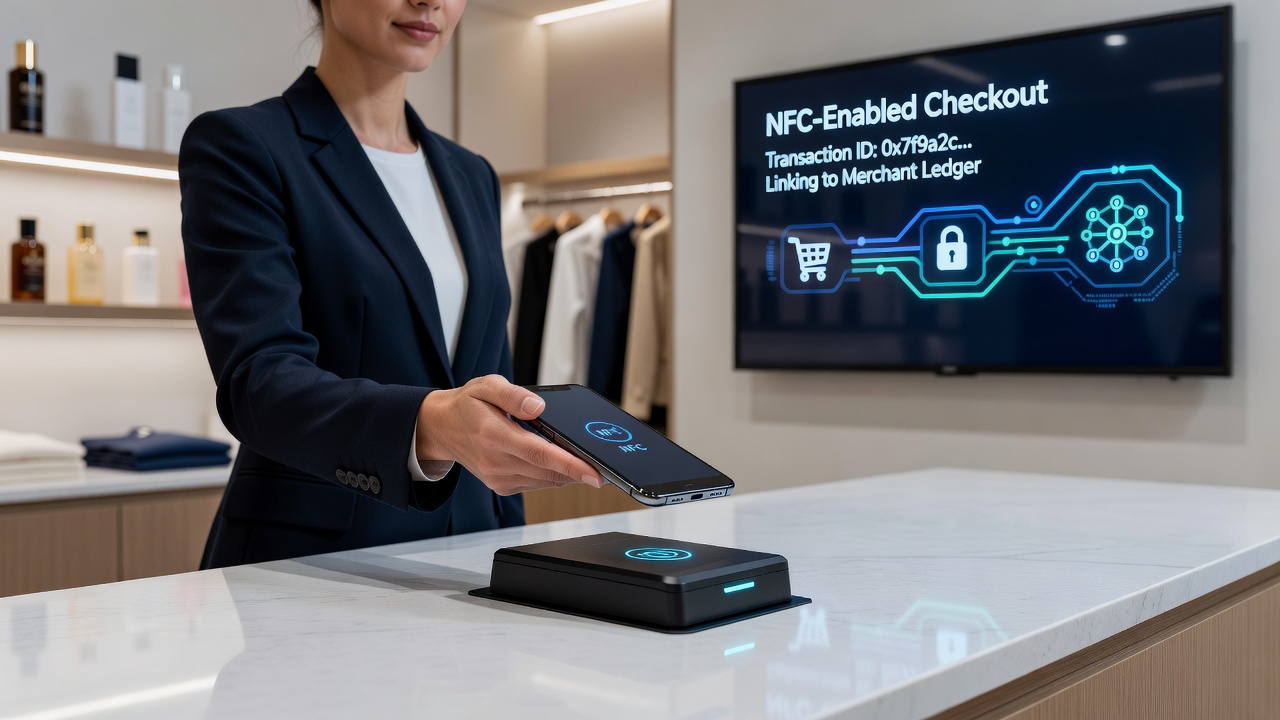
During a typical checkout, the customer device activates the NFC interface, which triggers a mutual authentication sequence defined by the EMV protocol. Terminal hardware then transmits an encrypted payload containing amount, merchant identifier, and timestamp to the acquiring bank network. Simultaneously, selected data fields route to the encrypted ledger via a dedicated compliance module that applies additional encryption and appends the entry to the chain. Retail chains have documented reduced reconciliation times because the ledger provides a single source of truth that aligns with point-of-sale logs, and this synchronization helps satisfy reporting deadlines set by tax authorities in multiple jurisdictions. Implementation timelines indicate further refinements scheduled for rollout in June 2026, when updated firmware versions will incorporate enhanced key rotation mechanisms for ledger access.
Security Mechanisms and Data Protection
Encryption at both the NFC and ledger layers employs established algorithms such as AES-256 for symmetric operations and elliptic curve cryptography for key exchanges. Each contactless session generates session-specific keys that expire immediately after use, limiting exposure windows in case of interception attempts. Ledger entries receive additional digital signatures that allow verification of origin without exposing underlying sensitive cardholder data. Research from academic institutions has examined these layered protections and confirmed that the combined approach meets or exceeds current regulatory thresholds for data-at-rest and data-in-transit security across retail payment environments.
Regulatory Alignment Across Regions
Merchants operating internationally must navigate differing compliance mandates, yet NFC standards paired with encrypted ledgers offer a flexible foundation that adapts to local rules. In Canada, the Office of the Superintendent of Financial Institutions has referenced similar technical requirements in its guidance documents, while Australian regulatory bodies emphasize record retention periods that encrypted systems readily support. The architecture permits selective disclosure, meaning auditors can query specific ledger segments without accessing the entire dataset. This granularity reduces administrative overhead while preserving the audit trail integrity that regulators require for ongoing oversight.
Implementation Considerations for Retailers
Businesses evaluating the transition typically begin with terminal firmware updates that enable ledger connectivity alongside existing NFC readers. Staff training focuses on recognizing transaction indicators and understanding escalation paths when ledger synchronization encounters temporary network issues. Case examples from large grocery networks illustrate that phased deployments, starting with high-volume locations, allow teams to validate data flows before wider expansion. Technical documentation supplied by standards organizations outlines precise message formats and error-handling procedures that maintain system reliability during peak shopping periods.
Future Developments and Scheduled Updates
Work continues on extending NFC range slightly while preserving security margins, and ledger protocols are incorporating zero-knowledge proofs that permit compliance verification without revealing transaction specifics. June 2026 marks the anticipated availability of revised EMV specifications that formalize direct ledger hooks within the contactless payment flow itself. These changes aim to further automate record creation, reducing opportunities for transcription errors in merchant reporting. Industry testing programs have already begun validating the new message structures across representative terminal hardware.
Conclusion
NFC standards continue to underpin efficient contactless retail operations, and their linkage to encrypted ledgers supplies merchants with robust mechanisms for maintaining compliance records. The combination delivers verifiable transaction histories that align with expectations from regulatory authorities worldwide. Ongoing refinements scheduled through 2026 will strengthen these connections, supporting both operational speed and audit readiness in evolving payment ecosystems.