Predictive Modeling Accelerates Settlement Processes Across Worldwide Financial Networks

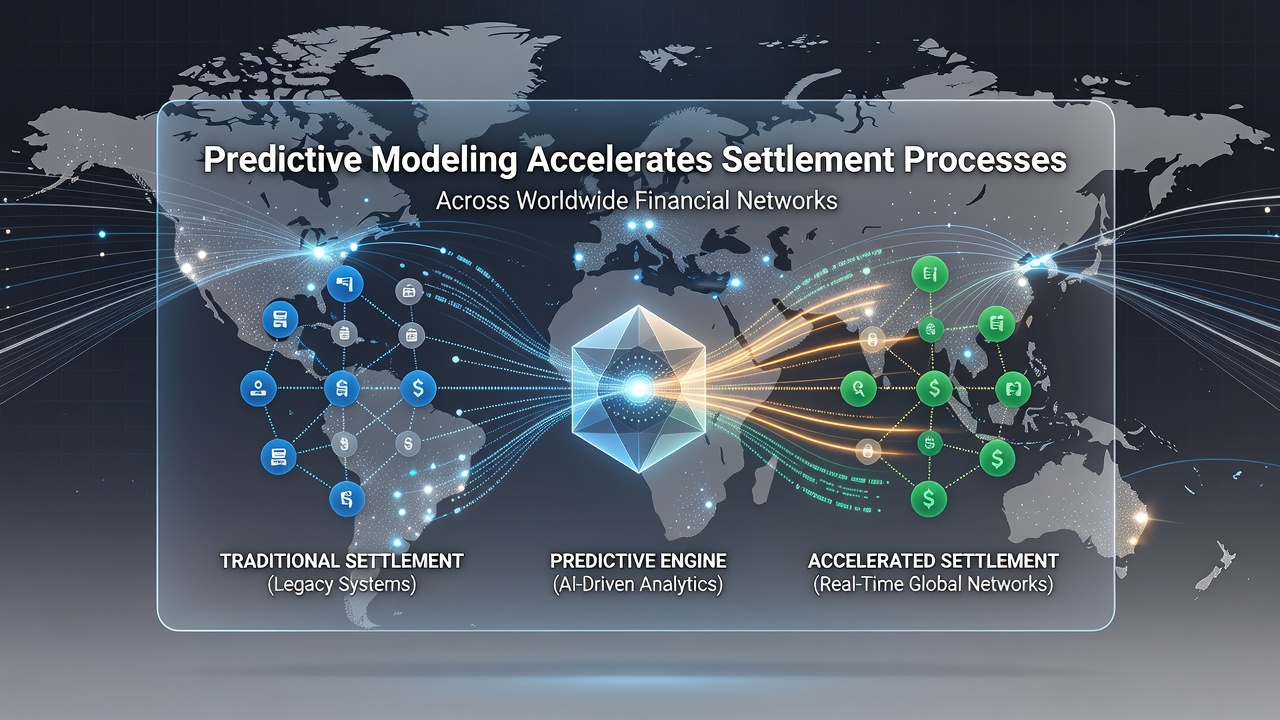
Financial institutions have turned to predictive modeling as a core tool for speeding up settlement cycles in interconnected payment systems that span multiple continents and regulatory zones. These models draw on historical transaction data, market indicators, and real-time feeds to forecast liquidity needs and identify potential bottlenecks before they form. Observers note that the approach reduces the time required for cross-border reconciliations while maintaining compliance with varying jurisdictional rules.
Mechanics Behind the Acceleration
Algorithms process streams of data from sources including SWIFT messages, central bank ledgers, and commercial bank records, then apply machine learning techniques to project settlement outcomes under different scenarios. Institutions feed variables such as currency fluctuations, regulatory reporting deadlines, and counterparty risk scores into the models, which in turn suggest optimal timing for fund movements and collateral postings. This integration allows operators to adjust schedules dynamically rather than relying on fixed batch processes that often stretched across several days.
Research from academic centers in North America and Europe shows that such forecasting cuts average settlement windows by measurable margins in high-volume corridors. Teams at major clearing houses now receive alerts when projected shortfalls appear, enabling preemptive borrowing or rerouting through alternative rails that offer faster finality.
Implementation Patterns in July 2026
By July 2026 several large-scale networks had rolled out updated predictive layers that synchronized with existing messaging standards. European operators linked their systems to models trained on multi-year data sets covering euro, pound, and yen flows, while North American platforms focused on dollar-denominated chains. The timing coincided with new reporting requirements from both the Federal Reserve and the European Central Bank that emphasized faster visibility into pending obligations.
What's interesting is how the models also incorporated weather and geopolitical signals that indirectly affect operational capacity at key settlement centers. One documented case involved a model that flagged potential delays in Asian clearing houses during monsoon season, prompting institutions to shift certain trades to earlier windows. Such adjustments occurred without manual intervention once thresholds were crossed.
Cross-Regional Coordination Benefits
Data compiled by the Bank for International Settlements indicates that predictive tools improved coordination between time zones where traditional cut-off times previously created gaps. Systems now project the impact of a delayed instruction originating in one region on downstream participants in others, then recommend compensatory actions such as partial netting or use of liquidity bridges. Participants report fewer failed settlements and lower overnight funding costs as a direct result.
Trade associations representing clearing and settlement entities have published case summaries showing consistent patterns across corridors. Models trained on anonymized data from multiple banks outperformed single-institution forecasts, because the broader data pool captured interdependencies that individual balance sheets could not reveal.
Technical and Regulatory Considerations
Engineers building these systems must balance model complexity against explainability requirements imposed by supervisors. Regulators in different jurisdictions ask for documentation showing how predictions influence operational decisions, which has led developers to embed audit trails directly into the modeling pipelines. Continuous retraining on fresh data helps maintain accuracy when market structures shift, yet it also demands robust governance to prevent drift or bias in the underlying datasets.
Security protocols around the data feeds have tightened in parallel. Encrypted channels carry the inputs to centralized or distributed compute environments, and output recommendations pass through validation layers before reaching trading desks or treasury teams. This layered approach satisfies both speed and oversight demands that characterize modern financial infrastructure.
Conclusion
Predictive modeling continues to reshape how worldwide financial networks manage settlement timing and resource allocation. Institutions that integrate these capabilities report measurable reductions in cycle times while preserving the transparency required by oversight bodies. As data sources expand and algorithms refine further, the same frameworks are expected to support additional use cases such as intraday liquidity optimization and stress scenario planning across borders. The trajectory points toward tighter coupling between forecasting engines and operational systems that already handle trillions in daily value.