Tracing Fund Flows in Crowdfunding Campaigns from Initial Pledges Through Multi-Provider Disbursements
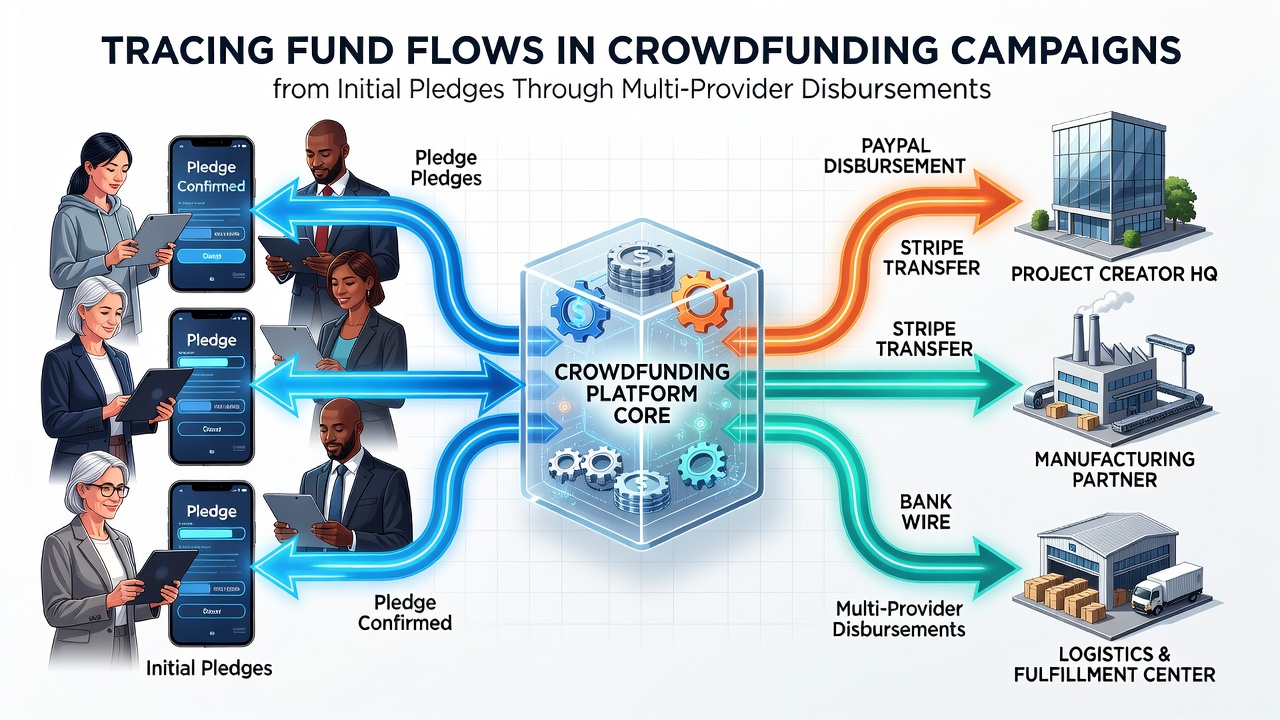
Fund tracing in crowdfunding starts when a backer authorizes a pledge on a campaign page and moves through several layers of processors before reaching the project creator or returning as a refund; each step generates records that platforms and regulators examine to confirm compliance and accuracy. Observers note that campaigns on major sites collect pledges through integrated gateways while holding funds until goals are met or deadlines pass, and this creates a chain that involves banks, card networks, and specialized disbursement services working in sequence.
Initial Pledges and Authorization Records
Backers enter payment details at checkout and receive immediate authorization confirmations that platforms store alongside campaign identifiers, timestamps, and amounts; these entries form the first layer of documentation that later matches against actual transfers. Data from the U.S. Securities and Exchange Commission shows that Regulation Crowdfunding campaigns must maintain detailed pledge logs to support investor protections, and those records often include IP addresses plus device fingerprints that help verify transaction origins. Payment processors then route authorized amounts into escrow-style accounts where they remain until release conditions are satisfied, which prevents premature movement while allowing campaigns to display real-time totals.
Platforms send confirmation emails that reference unique transaction IDs, and these messages serve as backup evidence when disputes arise or when audits request source documents. Researchers have found that pledge data collected in July 2026 reflected increased use of digital wallets, which added new fields such as wallet provider IDs to existing audit trails and required systems to reconcile those identifiers with traditional card records.
Processing Through Multiple Providers
Once pledges clear initial authorization, funds travel across gateways operated by different companies that each apply fees, perform fraud screening, and log settlement details before passing balances onward. A single campaign might involve a primary processor handling card charges, a secondary service managing bank transfers, and a tertiary provider executing international payouts, and each handoff produces matching entries that systems later reconcile. Experts point out that these layered movements require synchronized timestamps and reference codes so that total inflows equal total outflows minus disclosed fees.
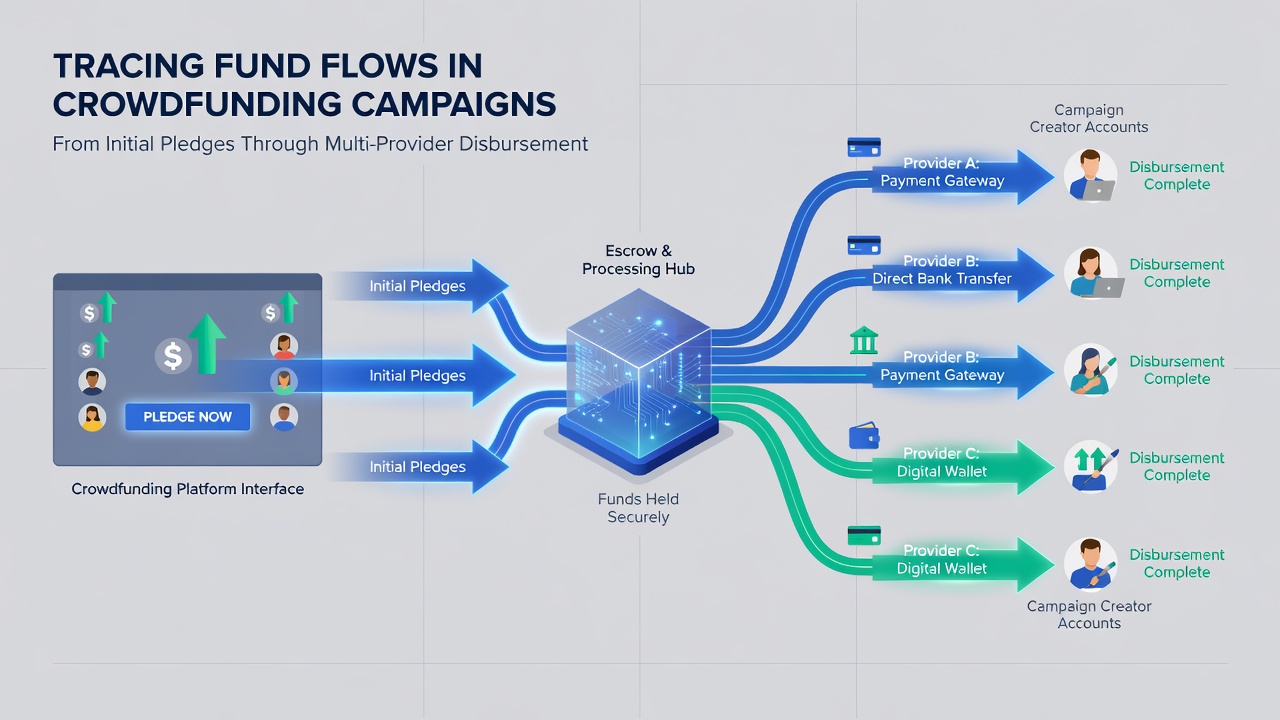
Platforms maintain internal dashboards that display cumulative balances at each stage, and users can export transaction histories that list every provider involved along with their specific actions. Australian Securities and Investments Commission guidelines require crowdfunding intermediaries to keep records that allow reconstruction of fund movements from pledge to disbursement, and similar rules in other jurisdictions encourage standardized reporting formats that ease cross-provider verification. When a campaign succeeds, the primary processor releases escrowed amounts to the creator after subtracting platform and payment fees, while failed campaigns trigger automated refund instructions that travel back through the same chain in reverse order.
Disbursement and Reconciliation Steps
Disbursements occur after manual or automated reviews confirm that campaign terms have been met, and creators receive notifications that list net amounts alongside breakdowns of fees and taxes withheld. Observers have documented cases where multi-provider setups introduced small rounding differences that reconciliation tools flag for manual review before final settlement. Those who've studied disbursement patterns note that batch processing often groups multiple campaigns together, which speeds transfers but requires precise allocation tables to ensure each creator receives the correct share.
Refund flows follow similar pathways yet carry additional compliance checks because processors must verify that original payment methods remain valid and that chargeback windows have not closed. Systems automatically generate credit entries that reference the original pledge IDs, and these entries appear in both platform reports and bank statements so that backers can match incoming credits to their earlier outflows. Data indicates that July 2026 saw wider adoption of real-time reconciliation APIs that connect campaign platforms directly to processor ledgers, reducing the lag between pledge capture and visible fund status.
Tools That Support End-to-End Visibility
Modern dashboards aggregate data from every provider into unified views that display pledge totals, fee summaries, and pending disbursements side by side, and export functions allow users to pull CSV or PDF reports covering any selected date range. Automated alerts notify administrators when mismatches appear between expected and received amounts, which triggers investigation workflows that examine logs from each involved service. Industry reports from research institutions highlight that platforms using unified APIs experience fewer reconciliation errors because transaction references remain consistent across providers instead of fragmenting into separate numbering systems.
Those managing large campaigns often connect their accounting software to platform APIs so that fund movements appear automatically in general ledgers, and this integration reduces manual entry while preserving the chronological sequence needed for audits. Regulatory updates scheduled around mid-2026 emphasize the importance of maintaining provider-specific logs that list every fee, currency conversion, and settlement delay, and these requirements encourage platforms to standardize data fields across their disbursement partners.
Conclusion
Tracing fund flows from initial pledges to final disbursements involves coordinated record-keeping across multiple providers, and the resulting documentation supports both operational oversight and regulatory compliance. Platforms that maintain clear reference chains and synchronized timestamps enable accurate reconciliation even when campaigns span several payment services and jurisdictions. As processing technologies continue to evolve, the core requirement remains the same: every movement must be traceable from authorization through to completion or reversal.