Transaction Trails Decoded: Mastering Payment Histories, Receipts, and Dashboard Controls
Transaction Trails Decoded: Mastering Payment Histories, Receipts, and Dashboard Controls
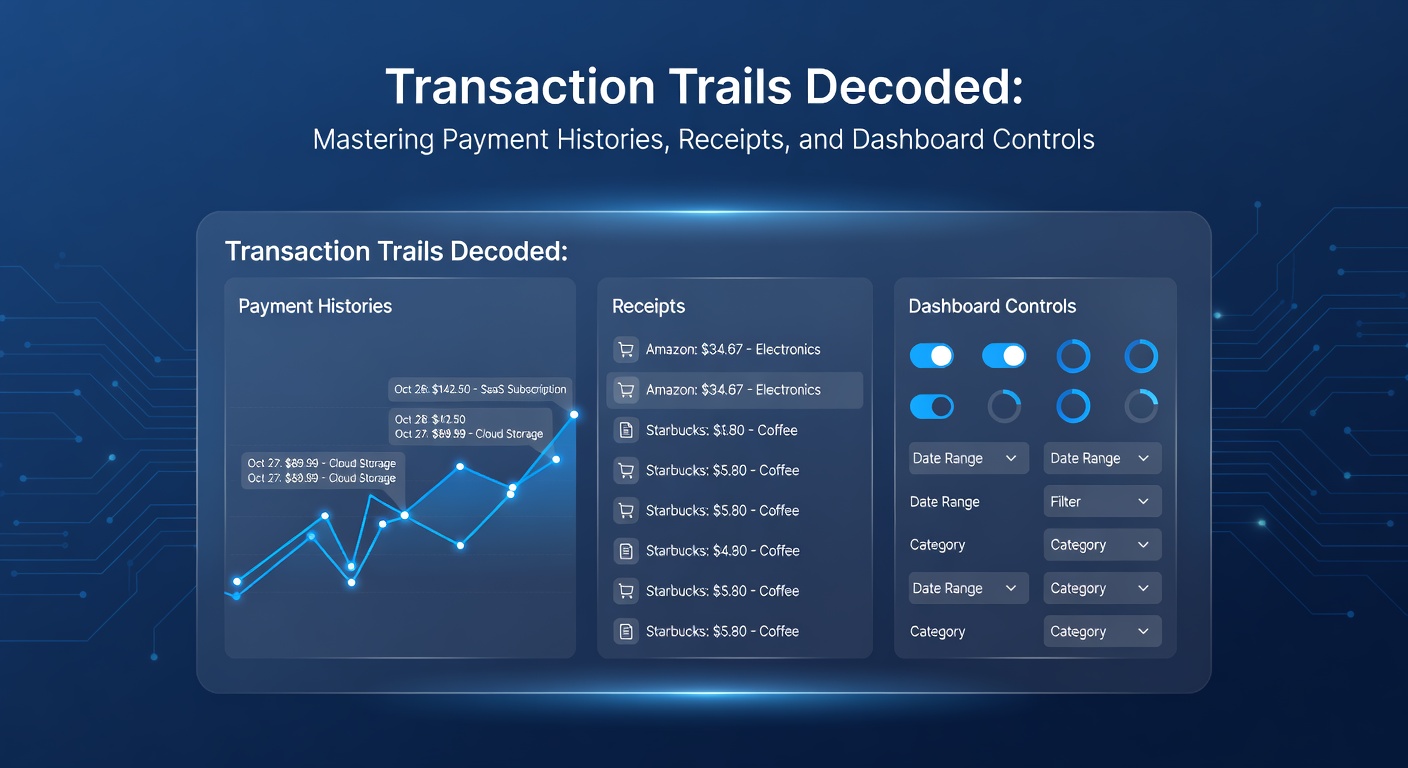
Unraveling the Layers of Payment Histories
Payment histories form the backbone of financial tracking, capturing every debit, credit, and transfer in a chronological trail that reveals spending patterns, income flows, and potential discrepancies; experts note how these records, often spanning months or years, enable users to pinpoint anomalies before they escalate into larger issues. Data from the Consumer Financial Protection Bureau shows that consumers who regularly review their histories detect unauthorized transactions 40% faster than those who don't, while businesses leverage these trails for cash flow forecasting and audit preparation. And here's the thing: in an era where digital wallets and instant payments dominate, histories now include metadata like geolocation stamps and device IDs, adding depth to what was once a simple list of amounts and dates.
Those who've mastered this aspect often start with categorization; platforms automatically tag transactions as groceries, utilities, or subscriptions, but manual adjustments refine accuracy, especially when imports from banks introduce vague labels like "POS purchase." Turns out, cross-referencing histories against bank statements uncovers hidden fees or double charges, a common pitfall in cross-border payments where currency conversions complicate the picture.
Receipts as the Ultimate Verification Tool
Receipts serve as the tangible proof within digital ecosystems, linking abstract transaction entries to real-world purchases; they detail merchant info, taxes, itemized breakdowns, and timestamps, ensuring disputes resolve swiftly since regulators mandate their availability for up to seven years in many jurisdictions. Figures from the Australian Securities and Investments Commission reveal that 65% of payment disputes hinge on missing or incomplete receipts, underscoring their role in compliance and refunds. What's interesting is how modern systems generate these instantly via email or app downloads, complete with QR codes for quick scans into accounting software.
People often find that exporting receipts in bulk—say, for tax season—transforms chaos into order; one study from a Canadian financial research group highlighted how freelancers using receipt-linked histories reduced audit times by half, as every deduction backed by a digital trail stands unassailable. Yet, challenges persist with ephemeral receipts from pop-up merchants or crypto exchanges, where blockchain explorers fill the gap by verifying on-ledger proofs.
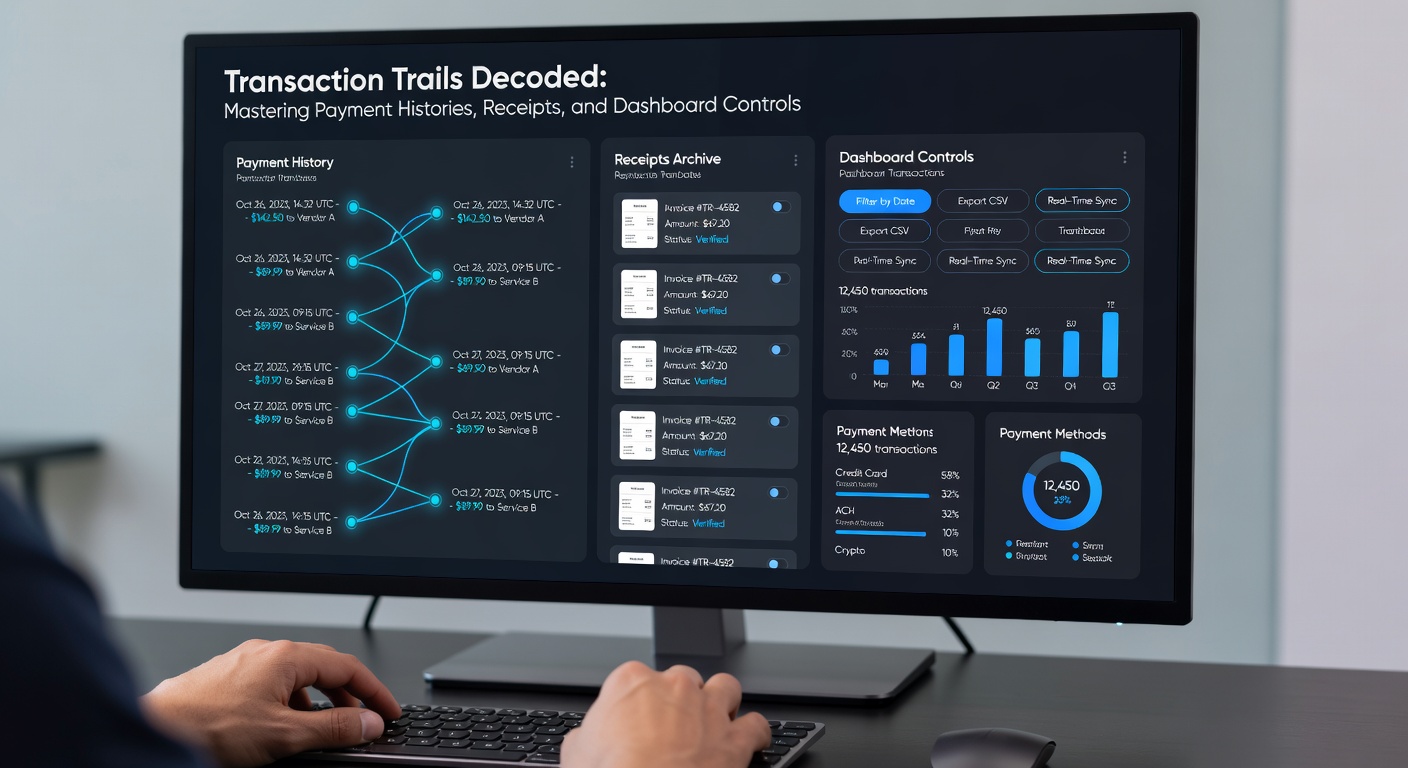
Dashboard Controls: The Command Center for Financial Oversight
Dashboards consolidate histories and receipts into interactive hubs, offering filters by date range, amount thresholds, merchant, or status—pending, completed, failed—while charts visualize trends like monthly peaks in utility bills or seasonal subscription spikes; users toggle views from list to graph seamlessly, exporting data in CSV or PDF for deeper analysis. Observers point out that customizable alerts notify of unusual activity, such as transactions exceeding set limits, preventing fraud in real time. So, as of April 2026, with platforms rolling out AI-driven summaries, dashboards now predict future spends based on historical patterns, a feature rolled out amid rising demand for proactive controls.
But here's where it gets interesting: advanced controls include role-based access, vital for teams sharing accounts; admins set permissions for viewing histories without editing receipts, while audit logs track every dashboard interaction. Researchers who've analyzed user behavior discover that those employing multi-factor authentication on dashboards experience 70% fewer breaches, blending security with usability in ways that older systems couldn't match.
Advanced Techniques for Trail Analysis
Mastery comes from layering tools atop basics; anomaly detection scans histories for outliers—like a sudden spike in international transfers—flagging them with probability scores, while receipt matching algorithms reconcile 95% of entries automatically, per industry benchmarks. And take one business owner who noticed recurring micro-payments in their history; drilling into receipts revealed subscription creep, leading to a 20% cost trim through cancellations. That's where the rubber meets the road: integrating APIs pulls live feeds from multiple sources, creating unified trails that span banks, cards, and apps.
Now, for power users, scripting custom queries via dashboard consoles sifts petabytes of data; one expert shared how they scripted a report correlating receipt taxes with regional rates, uncovering overcharges during travel. It's not rocket science, but it demands familiarity with filters like "exclude refunds" or "group by category," turning raw data into actionable insights. Although seasonal fluctuations muddy waters, year-over-year comparisons smooth them out, revealing true growth or decline.
Security and Compliance in the Age of Enhanced Tracking
Secure trails demand encryption at rest and in transit, with dashboards enforcing session timeouts and IP whitelisting; compliance with standards like PCI DSS ensures receipts redact sensitive card details, displaying only last-four digits. Data indicates that platforms updating to post-quantum cryptography in early 2026 safeguard histories against emerging threats, while biometric logins add another layer for high-value controls. People who've adopted these report zero tolerance for shadow transactions—those unlogged or manipulated—since immutable ledgers log every change.
Yet, global variations apply: EU users benefit from PSD3-mandated real-time dashboards come April 2026, granting instant access to histories across borders, whereas North American platforms emphasize receipt portability for easier switches. Observers note how this fosters trust, with retention policies auto-archiving old trails to balance privacy and audit needs.
Real-World Case Studies: Lessons from the Field
Consider a retail chain whose dashboard overhaul exposed duplicate vendor payments hidden in fragmented histories; cross-checking receipts recovered $50,000 in a quarter, proving the value of unified views. In another instance, a freelancer's alert on irregular history entries led to freezing a compromised account, receipts confirming fraudulent charges reversed within hours. These stories highlight patterns: small businesses gain most from receipt exports tied to dashboards, while individuals master budgeting through trend visualizations. And for enterprises, API-driven dashboards integrate with ERP systems, automating compliance reports that once took days.
What's significant is the shift toward predictive analytics; one study found users forecasting cash shortfalls with 85% accuracy after six months of history mastery, receipts providing the granular proof that models crave.
Conclusion
Transaction trails, fortified by receipts and dashboard prowess, empower precise financial navigation; from spotting discrepancies to fueling strategic decisions, these elements interconnect in ways that demystify money movement. As April 2026 brings AI enhancements and regulatory tweaks, platforms evolve to deliver even sharper controls, ensuring users stay ahead. Those who decode their trails not only safeguard assets but unlock efficiencies lurking in the data—simple habits yielding profound results over time.